
HOGUE DRONE SERVICESWINNIPEG, MANITOBA

RPAS TRAINING   /   WINNIPEG

HOGUE'S
DRONE
ACADEMY

Before you lift off, you should be able to explain where you’ll fly, what could change and when you’ll bring the aircraft home. Learn it with Eric Hogue, then put it into practice.

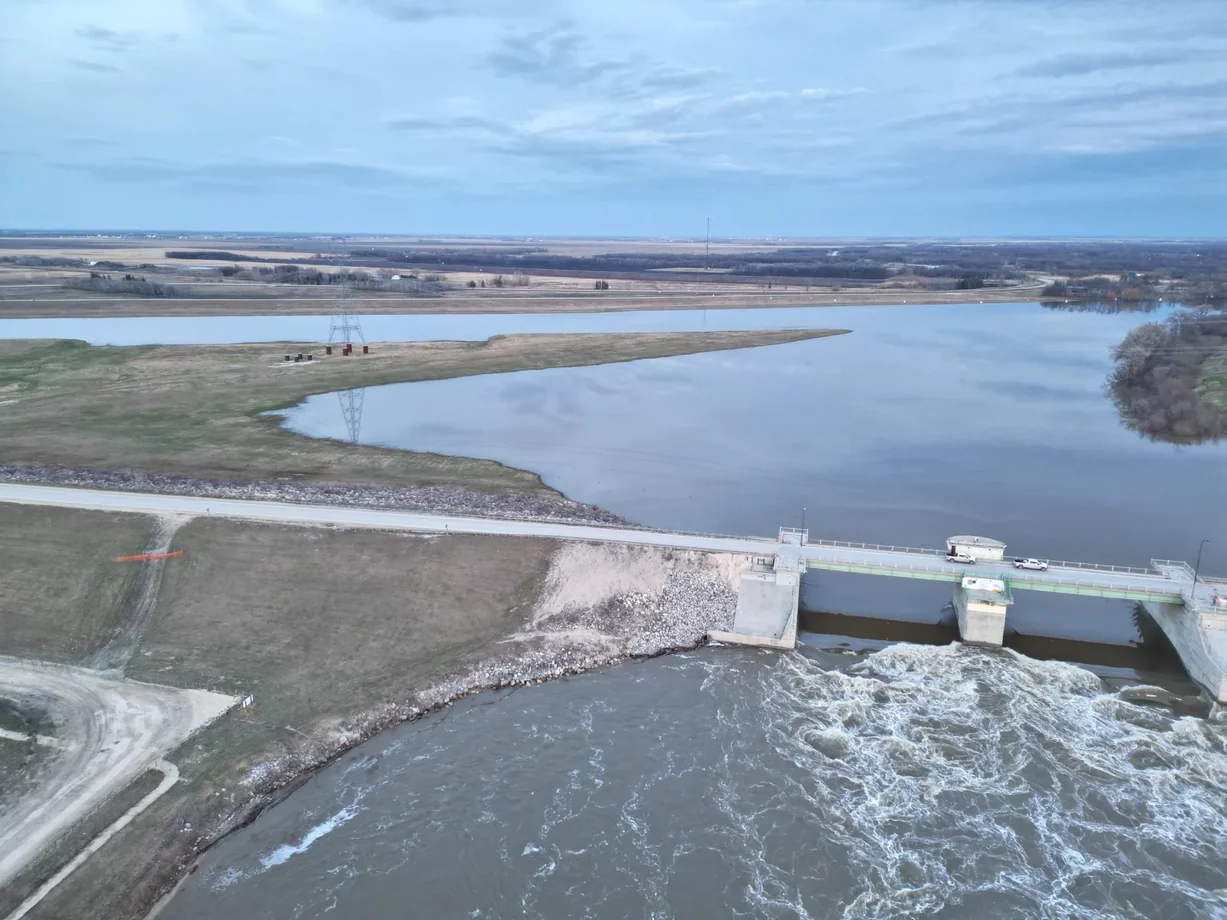
Aerial view of the Red River Floodway showing waterways, roads and open ground
HDS FLIGHT ARCHIVERed River Floodway, Manitoba

Need a flight review? Let’s do it today!

Passed the Advanced exam? Call for today’s Winnipeg availability. Eric confirms eligibility, the affiliated reviewer, site permissions, weather and the time before you travel.

Call 204-955-8328

01   /   COURSES & TUITION

Choose the training you need.

First flight, first written exam, or a practical review coming up? Choose a session below. Prices are in Canadian dollars per student, before applicable taxes. Transport Canada exam and certificate fees are paid separately through the Drone Management Portal.

FULL GROUND SCHOOL   /   HDS-TP15263-001

Basic & Advanced RPAS ground school

20 hours with an instructor. Twelve hours in a Winnipeg classroom and eight hours live online.

$649CAD · full blended course

Who it’s for. New pilots and working operators who want the complete knowledge course. No previous flight experience is required. Bring a laptop or tablet for charts, planning exercises and live sessions.

How you finish. Complete every scheduled module, work through a mission brief and take the Academy’s final knowledge check (80% target). The instructor reviews missed safety-critical or regulatory topics with you and records completion. The Academy issues a course completion record. Transport Canada issues the pilot certificate through its own process.

See all ten modules and the 20-hour breakdown
Instructional hours by format
ModuleClassroomLive onlineWhat you will practise
01   Canadian aviation law and Part IX1.51.5Classify the proposed operation and identify the pilot, aircraft and authorization requirements.
02   Airspace and air traffic procedures1.51.0Read the airspace picture, aerodrome information and current aeronautical notices (NOTAMs).
03   Aircraft, propulsion and command link1.01.0Trace power and control systems and explain the aircraft’s response to a lost command link.
04   Human factors and pilot decisions0.51.0Recognize fatigue, pressure to finish and workload. Practise handing a task to a crew member.
05   Weather for drone pilots1.01.0Compare wind, gusts, visibility and temperature with the aircraft and site limits.
06   Navigation and charts1.50.5Mark a flight area, choose references and plan a route back to a safe landing area.
07   Flight operations and emergencies2.01.0Complete a site survey, crew briefing and abnormal-event scenario, including reporting.
08   Aircraft safety assurance and detect-and-avoid0.50.5Use Standards 922 and 923 to distinguish an aircraft’s declared capability from the conditions for a specific operation.
09   Theory of flight and performance0.50.5Explain how wind, weight, thrust and available battery energy change the margin for a return flight.
10   Radio and integrated scenarios2.00.0Practise air traffic terminology and combine radio awareness, weather, routing and emergency decisions in one mission brief.
Total12.08.020 hours of TP 15263 instruction

Breaks, independent study, the films below and optional flight coaching are outside these hours. A separate review appointment is required for an Advanced certificate.

Ask about the next cohort

Short courses and field sessions

Open a course for the prerequisites, practical exercises and what to bring. Online sessions are live with an instructor. Each course can be booked on its own.

Small Basic exam preparation3 hoursLive online $149 Winnipeg classroom $199

For new pilots planning small-drone flights in uncontrolled airspace. No previous flying experience is required.

What you’ll do

Work through a first-flight scenario. Check aircraft weight, registration and Basic operating limits, read a weather report and decide whether a proposed site fits the rules.

What to bring and take away

Leave with a completed site worksheet, a short practice test with explanations and a study list for the Small Basic Exam. Bring your aircraft model and a site you want to fly.

Ask for a course date
Advanced exam preparation6 hoursLive online $299 Winnipeg classroom $379

For pilots familiar with Basic rules who want focused preparation for the Advanced exam. A Basic certificate is optional for this workshop.

What you’ll do

Brief a controlled-airspace scenario. Read chart and NOTAM information, identify the permission needed, match the aircraft declaration to the operation, and explain what changes for sheltered and extended visual-line-of-sight flights.

What to bring and take away

You will present a mission brief and complete a timed practice set. We review the reasoning behind missed questions. Bring your aircraft manual and a laptop or tablet.

Ask for a course date
Site survey and mission planning2 hoursLive online $119 Winnipeg classroom $169

For pilots who can fly the aircraft and want a better way to decide whether a job should go ahead.

What you’ll do

Using a sample Winnipeg-area site, mark obstacles, access points and an alternate landing area. Check weather, airspace and nearby aerodromes, and record what would make you postpone.

What to bring and take away

Take home a marked site plan, a written go/no-go decision and a short crew brief. Bring the approximate location of a practice site.

Ask for a course date
Advanced review rehearsal90 minutesLive online $99 Winnipeg field $179

For an Advanced candidate who wants to uncover gaps before booking the formal review. Ground discussion is available before or after your written exam.

What you’ll do

Online, talk through a mission, an unexpected change and your aircraft’s emergency procedures. In the field, practise a preflight, controlled takeoff, navigation, distance judgement and landing with feedback.

What to bring and take away

You receive a written practice list. For field work, bring the aircraft, controller, manual, registration and checklists. Confirm the supervision and site arrangements before flying.

Ask for a course date
Aircraft handling and field coaching2 hoursWinnipeg field $229

For new or returning pilots learning the controls of their own aircraft. Tell Eric your experience and aircraft model when booking.

What you’ll do

Check settings against the manual. Practise orientation, a stable hover, accurate turns, a landing approach and a safe stop decision. Lost-link response is discussed or simulated without deliberately disconnecting a flying aircraft.

What to bring and take away

Leave with an aircraft-specific preflight checklist and exercises to repeat. Bring a serviceable aircraft, controller, charged batteries, manufacturer instructions and registration where required.

Ask for a course date

Winnipeg field rates cover the stated teaching time using the agreed aircraft and site. Ask for a travel quote for an out-of-town session. The instructor confirms the meeting point, equipment and weather plan before booking. Flight instruction is supervised under the rules applicable to the pilot, aircraft and site.

02   /   THE PRACTICAL ASSESSMENT

Book an Advanced flight review.

Eric holds a Transport Canada Advanced pilot certificate and Flight Reviewer Rating. A formal review is an in-person assessment conducted through a self-declared flight school with a current reviewer affiliation.

CAD $299FlySmart’s published base fee for an Advanced flight review, plus applicable tax. The booking provider confirms the final fee, reviewer and available time. Check the provider rate.

Before heading to the field

  1. Call first. Give your name, preferred day, aircraft model, callback number and whether you passed the Advanced exam. Keep ID and registration documents for the reviewer’s identity check.
  2. Bring your records. Bring your passed exam result with its reference number, your Drone Management Portal registration/reference number, valid government-issued ID showing your name and birth date, and the registration certificate for the aircraft.
  3. Bring a ready aircraft. Pack the controller, charged batteries, manual, established normal and emergency procedures, site survey and mission plan. The reviewer confirms the equipment is eligible for the planned operation.
  4. Fly the assessment. Brief the site and mission, explain lost-link, fly-away and incident reporting, complete preflight checks, take off, navigate, judge distances and land. The reviewer assesses independently and stops unsafe flying. Coaching is booked separately.

The reviewer submits results through Transport Canada within 24 hours. After a pass, apply in the portal and pay the applicable issuance fee. Foreign pilots must also meet the applicable SFOC-RPAS requirements before the review. Read Transport Canada’s flight-review instructions.

03   /   FREE TRAINING ROOM

Watch the briefing. Work the problem.

Use the films with the field workbook. Pause before the decision, write down what you would do, then check the debrief.

FILLABLE FIELD WORKBOOK   /   8 PAGES

Take the lesson to the launch site.

Fill out the site survey, permissions and crew log, practise an emergency brief, and debrief the flight. Eight original practice questions include explanations.

Open the workbook (PDF)
Try the six-question online practice check Instant feedback

Choose one answer per question. These are Academy practice scenarios. Your answers stay on this page.

01 A site is on private land. The landowner has said yes, but the flight area is in controlled airspace. What is your next step?
02 A gust reading is above the operating limit for the planned aircraft. What should the pilot do?
03 Which document best supports a briefing about your own aircraft’s lost-link behaviour?
04 A public footpath crosses your planned landing area and a walker enters it. What changes?
05 You have passed the official Advanced written exam. Which step comes next for initial Advanced certification?
06 During a formal flight review, a candidate asks the reviewer to demonstrate the manoeuvre first. What applies?

04   /   CERTIFICATION IN CANADA

Who teaches, who tests, who issues.

Small Basic

Minimum certificate age 14. Take Transport Canada’s Small Basic exam online. You have 90 minutes for 35 questions and need 65% to pass. Passing earns the Basic certificate through the portal. No flight review is required.

Small Basic exam details

Advanced

Minimum certificate age 16. The official Advanced exam is 50 questions in 60 minutes, with 80% required. Pass the written exam, pass the in-person flight review, then apply for your certificate. A Basic certificate is not a prerequisite.

Advanced exam details

Level 1 Complex

For lower-risk BVLOS pathways, use a provider listed for TP 15530. Transport Canada sets separate ground-school, exam, review and operating requirements. The Academy courses on this page cover Basic and Advanced preparation.

Find the right school

Academy status. HOGUE DRONE SERVICES submitted its TP 15263 training-provider declaration under the name HDS Drone Academy. An active Academy listing and reviewer affiliation under its own name have not been verified. The 20-hour course and shorter lessons are offered as private instruction. Formal Advanced reviews are confirmed separately through an affiliated provider. Official knowledge exams are taken by the candidate directly through Transport Canada.

If you need to rewrite either official exam, wait at least 24 hours. After certification, keep evidence of meeting the applicable 24-month recency requirements. An Academy practice quiz or short workshop on this page is not marketed as recency credit.

WINNIPEG FIELD SESSIONS   /   LIVE ONLINE TEACHING

Tell Eric what you want to fly.

Include the course, online or in person, your experience, aircraft model and the date you have in mind. Eric will confirm a time and the full price before you book.